Tom Beckenham, founder of digital ad agency Specle, argued that as only clever apps were capable of pulling in the newly emerging interactive digital ads they were clearly the way forward if publishers wanted to make ad revenue from them.
As Page Lizard editions include both PDF and HTML views - letting the reader choose the view they prefer - I tried to apply a bit of science to answer the question.
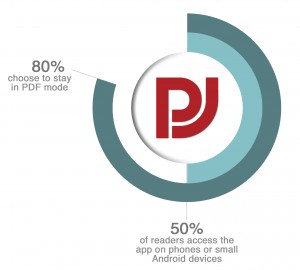
Our Pharmaceutical Journal app defaults to PDF when you tap the cover. And despite at least 50% of readers accessing the weekly publication on phones or small Android devices 80% of them choose to stay in page-flipping mode. That's disappointing to me, as pinch-zooming a print-page is clearly not going to be the best reading experience on a phone...
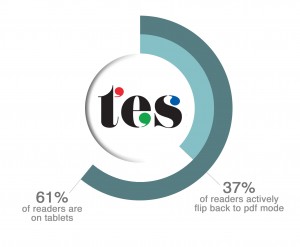
The Times Educational Supplement (TES) app defaults to HTML view. A whopping 61% come from tablets and they predominantly stay in HTML-mode. But 37% of page views are still generated by readers who flip back to the print page view.
They understand its layouts, its sections, can navigate around it confidently and, above all, they like the context that all the visual clues - big shouty headlines and picture display - offer. Its easy to tell a big important story from a little piddly one.
Whilst HTML is undoubtedly the technical way forwards it has to battle to provide that context and stop the stories turning into a 'washing line' of anodyne samey-looking stories.
As to the audience, when asked to vote, the majority voted in favour of the PDF… Graham Duffill